
Introduction
As QA demands grow, manual test case management becomes a bottleneck for agile teams. QA Catalyst, a modern QA automation tool, is designed to eliminate these inefficiencies. By integrating automation into your test case management processes, QA Catalyst helps reduce human error, enhance consistency, and boost your team’s productivity.
Why Automate Test Case Management?
Traditional test case management involves repetitive actions—creating test cases, mapping them to tasks, logging execution results, and generating reports. These steps, when done manually, can:
- Consume valuable time
- Introduce errors
- Cause delays in QA cycles
With QA Catalyst, your team can automate repetitive QA workflows, allowing testers to focus on strategic tasks.
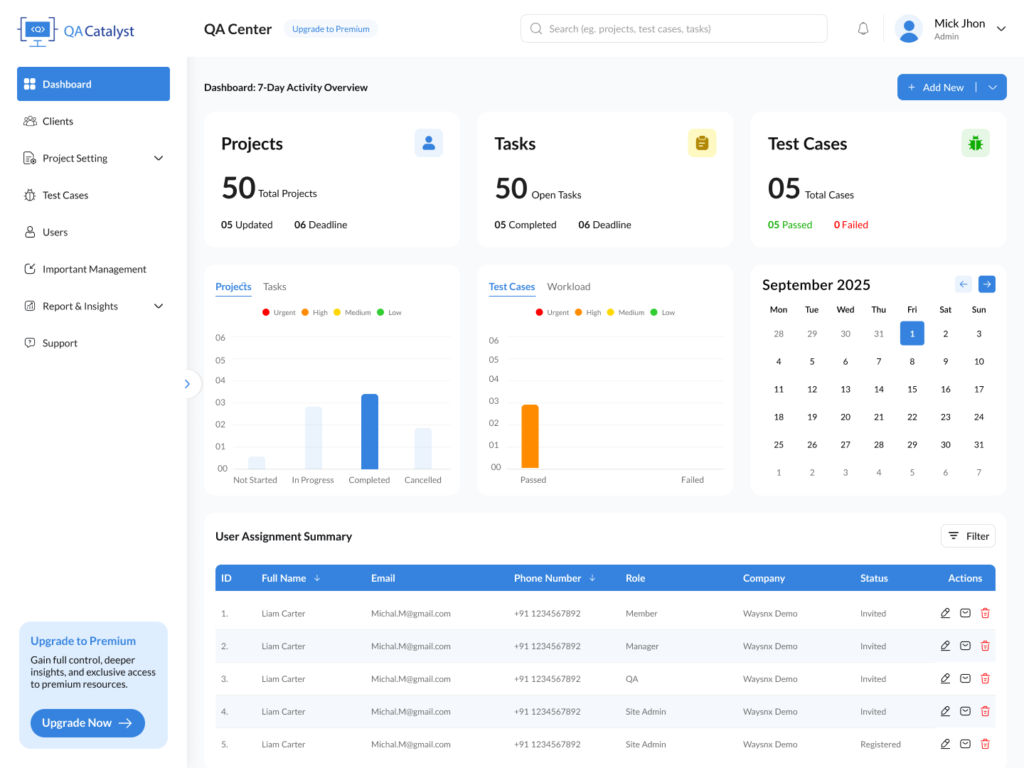
Key Automation Features in QA Catalyst
Bulk Import and Auto-Mapping
Import large volumes of test cases using Excel templates. QA Catalyst can auto-map them to relevant modules and tasks, eliminating the need for manual assignment.
Reusable Test Steps and Templates
Automate the reuse of common test steps by saving templates that can be applied across projects.
Auto-Status Updates
As tasks progress and time logs are entered, QA Catalyst can automatically update the status of related test cases, ensuring real-time accuracy.
Smart Reporting and Notifications
QA Catalyst offers automated reports and email notifications for:
- Failed test cases
- Missed deadlines
- Status changes
- Assigned test cases
These alerts help teams stay proactive, not reactive.
Seamless Collaboration with Role-Based Automation
Assigning roles automates access to features and data. QA Leads can get a bird’s-eye view while testers get auto-assigned tasks based on defined roles—streamlining communication and task flow.
Benefits of QA Workflow Automation
- Save time on repetitive tasks
- Reduce human error in test execution and documentation
- Increase transparency in QA progress
- Improve tester productivity
- Enable scalability as projects grow
Final Thoughts
QA Catalyst is more than a test management tool—it’s a QA workflow automation platform. Whether you’re handling complex enterprise QA or scaling agile projects, automating your test case management ensures quality at speed.